Senior Pets
Senior Dog Care Guide
A senior dog may still be playful, curious, and full of personality. The goal is to make daily life easier on joints, digestion, sleep, and confidence.
Watch for life-stage changes
Senior dogs may sleep more, move more slowly, hesitate on stairs, gain or lose weight, or become less tolerant of long exercise. Small changes are worth tracking because they help you have clearer conversations with your vet.
Pro Tip
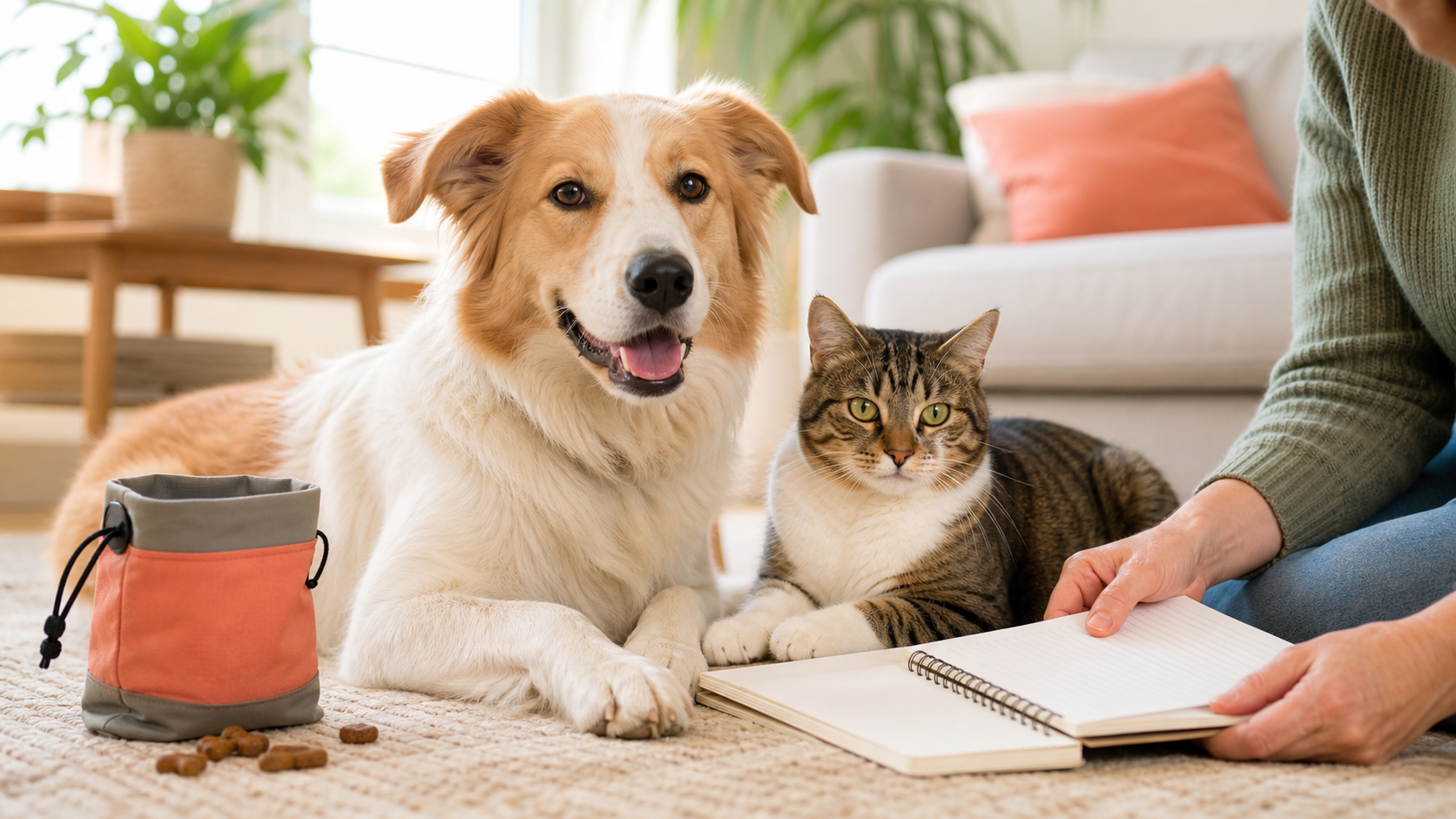
Keep a simple weekly note of appetite, weight, mobility, accidents, sleep, and mood. Patterns are often more useful than one-off observations.
Make the home easier to navigate
Use non-slip rugs, raised food bowls if recommended, easy-access bedding, and shorter play sessions. Comfort upgrades can reduce stress without changing your dog's whole routine.
Affiliate Product Recommendation
For dogs who seem bored or unfocused, reward-based training games can keep the mind active without heavy physical strain.
Try Brain Training for DogsWhen to call your vet
Call your vet if you notice sudden pain, collapse, breathing changes, major appetite shifts, new confusion, repeated vomiting, or sudden behaviour changes.